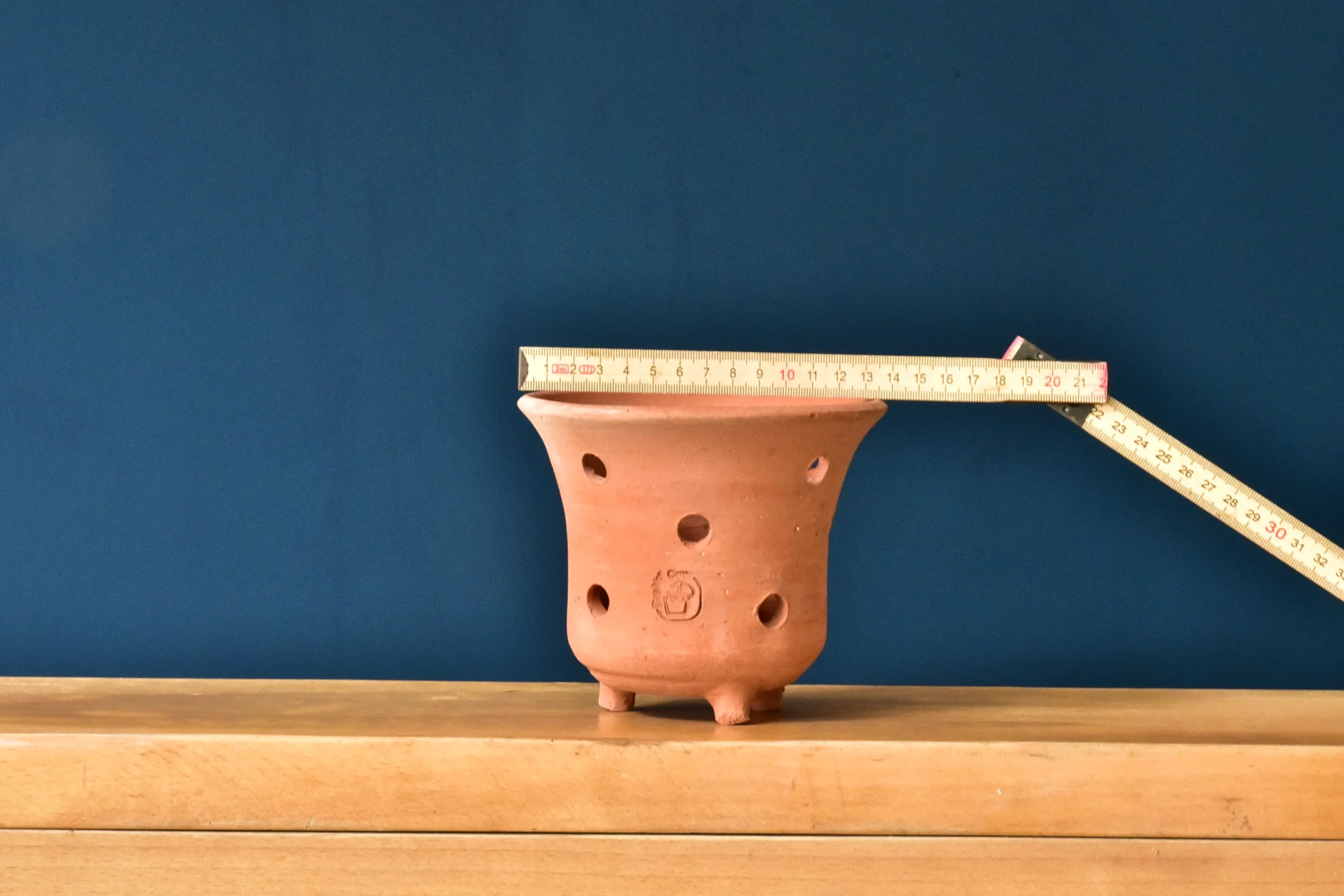
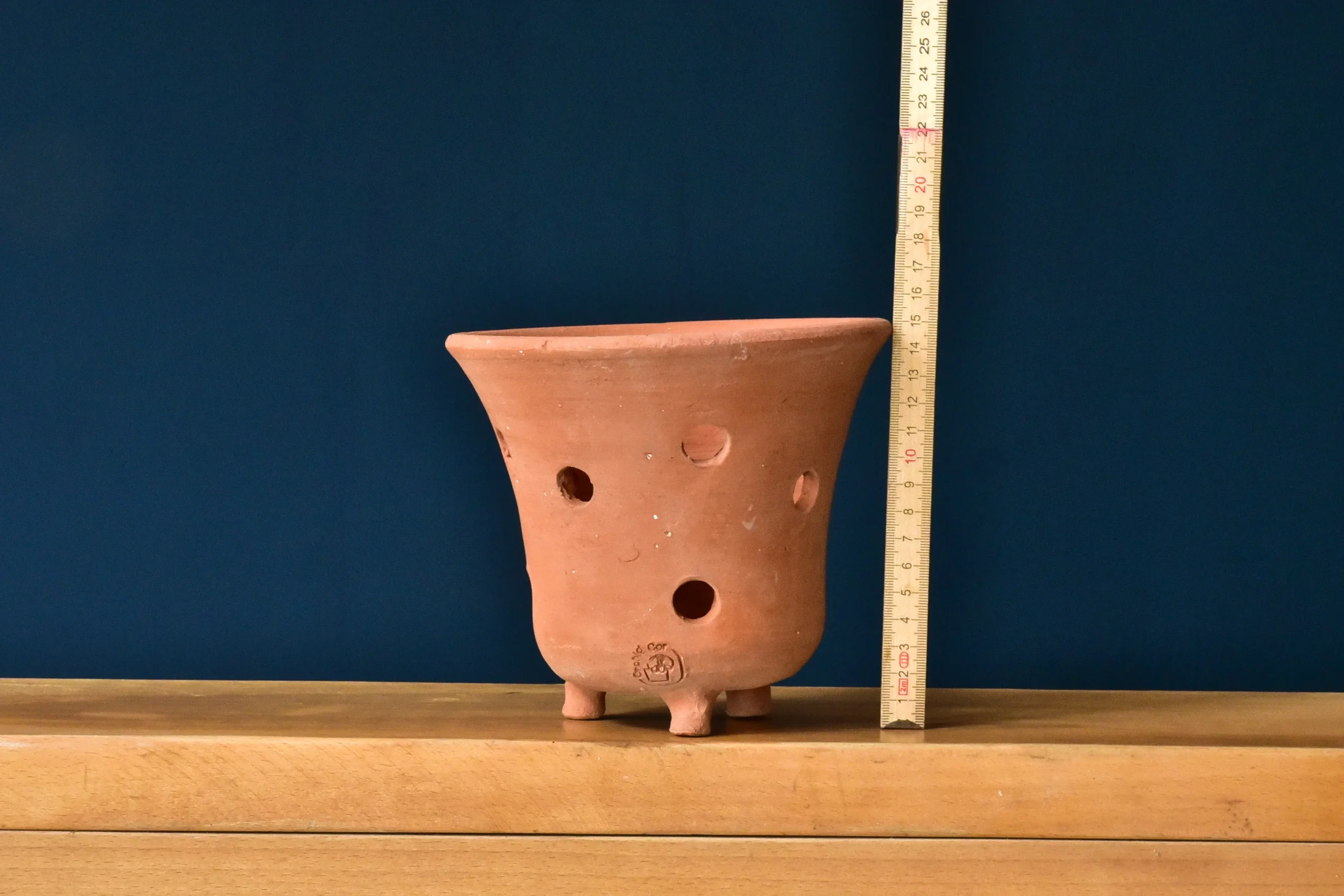
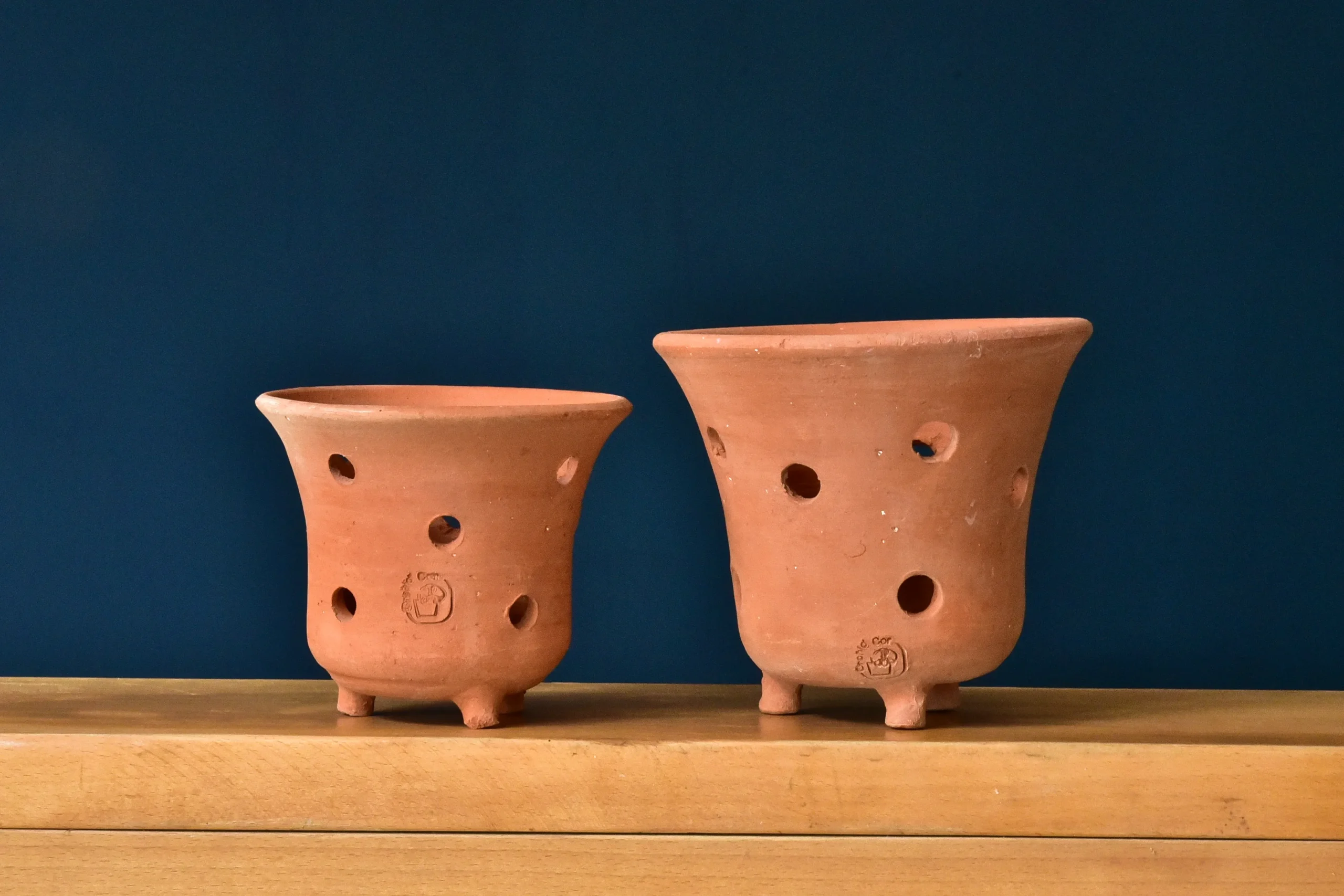
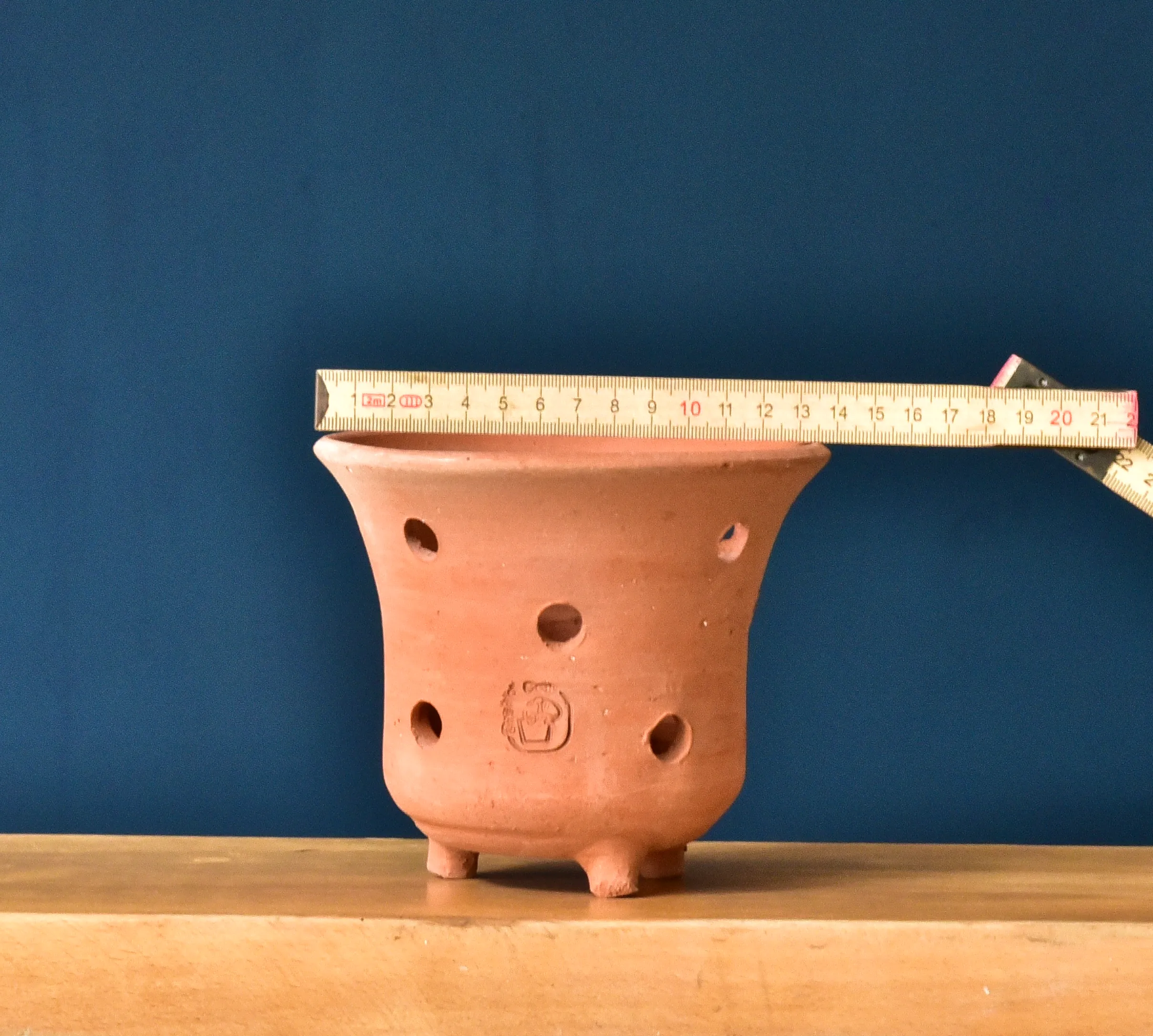
Description
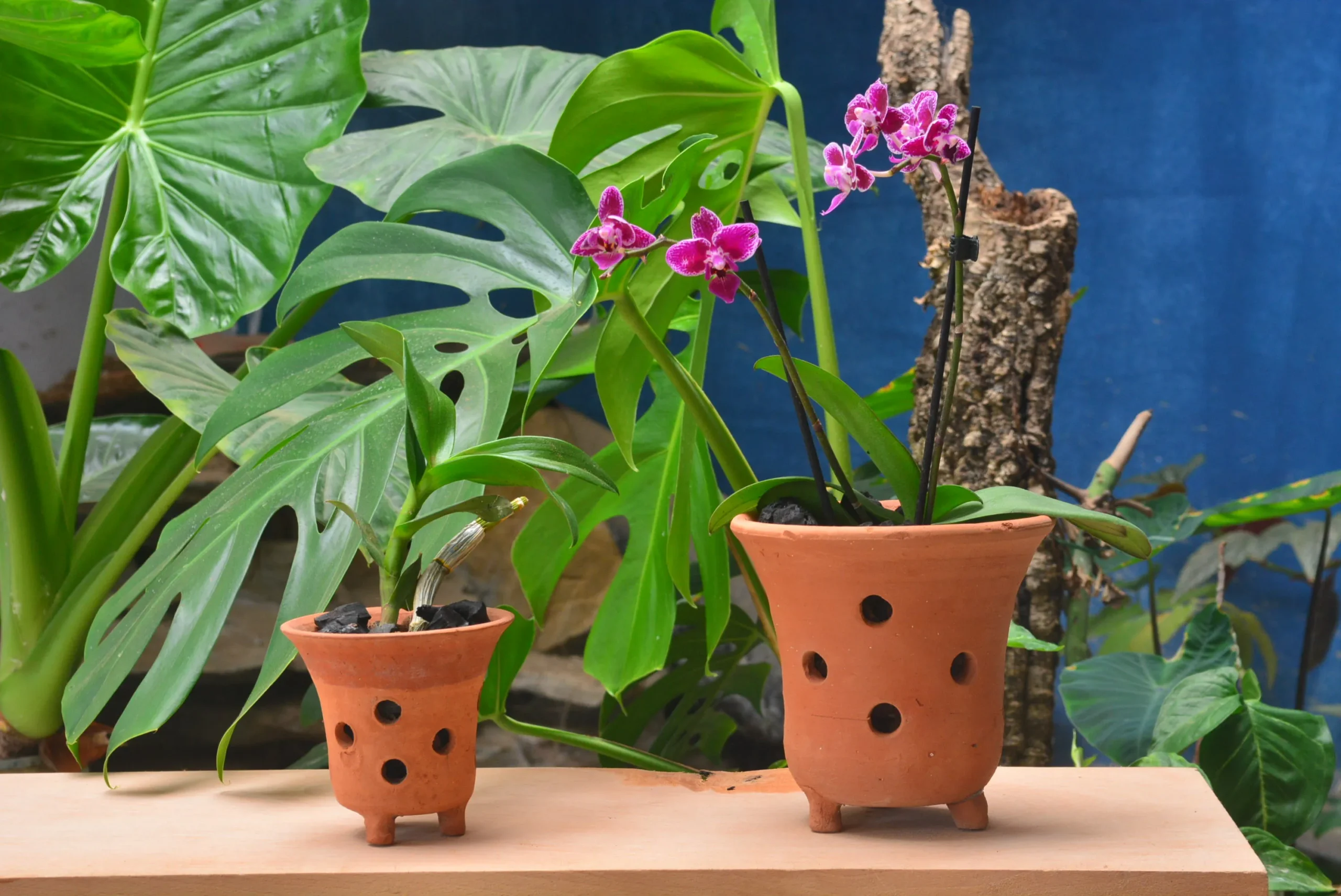
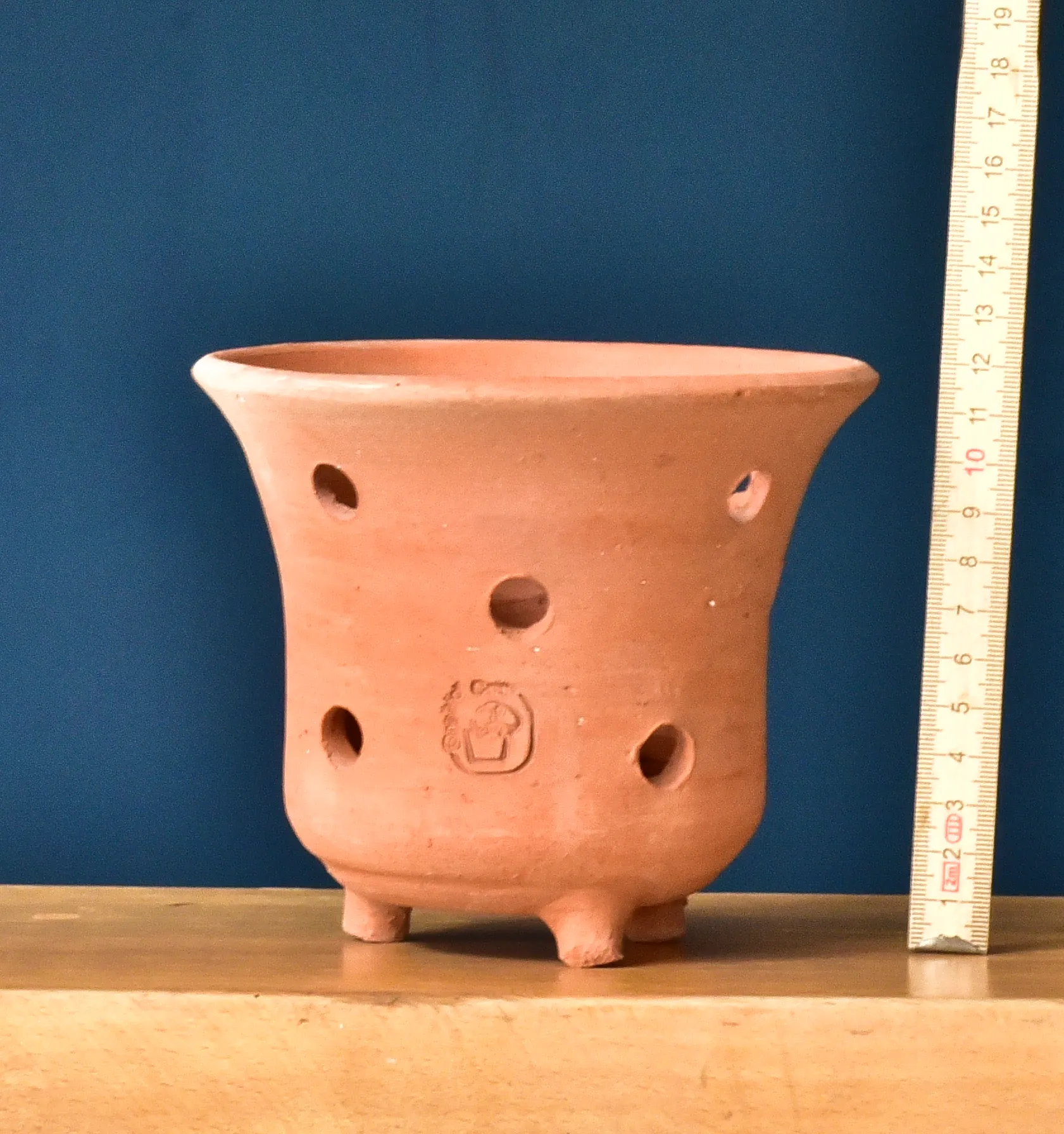
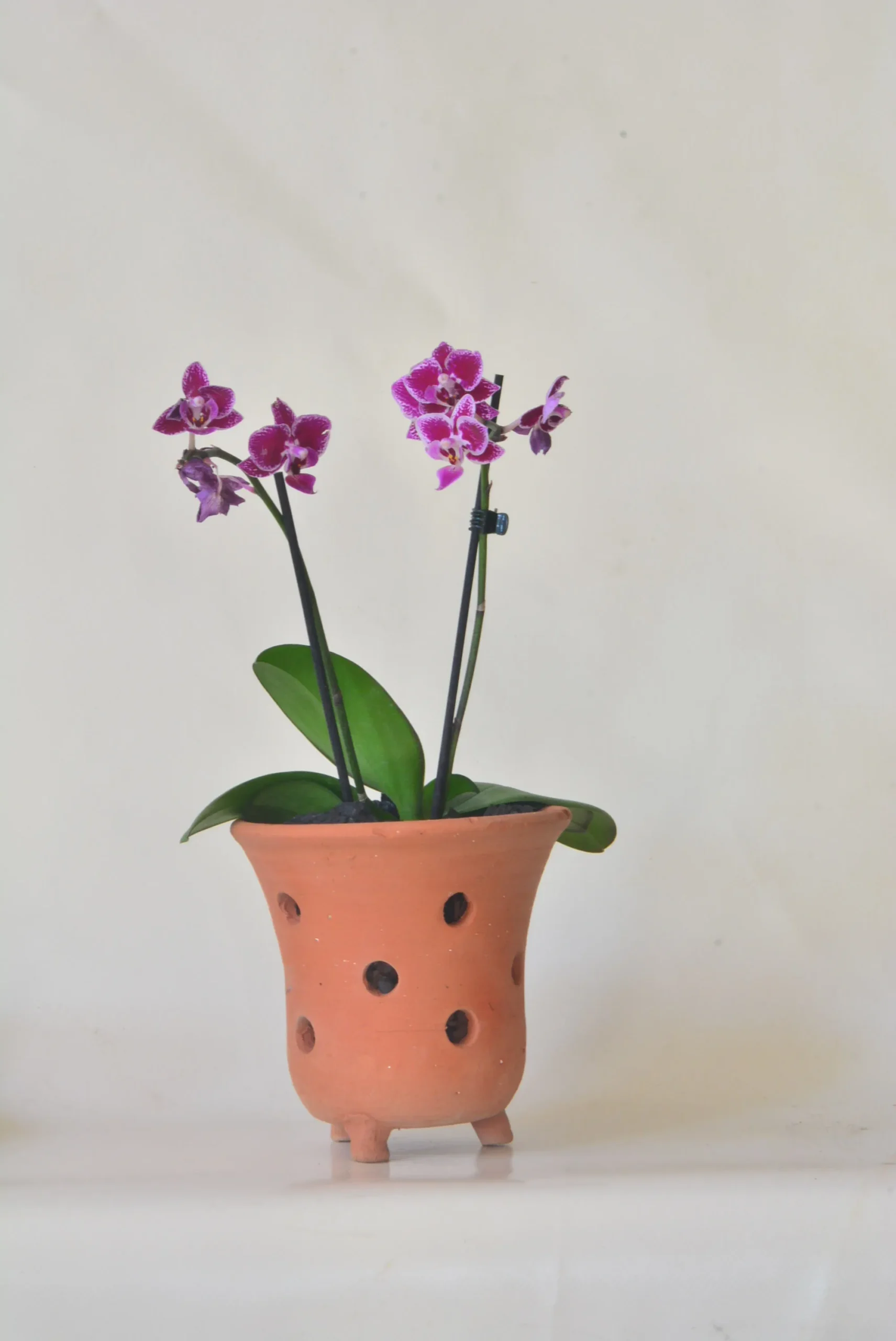
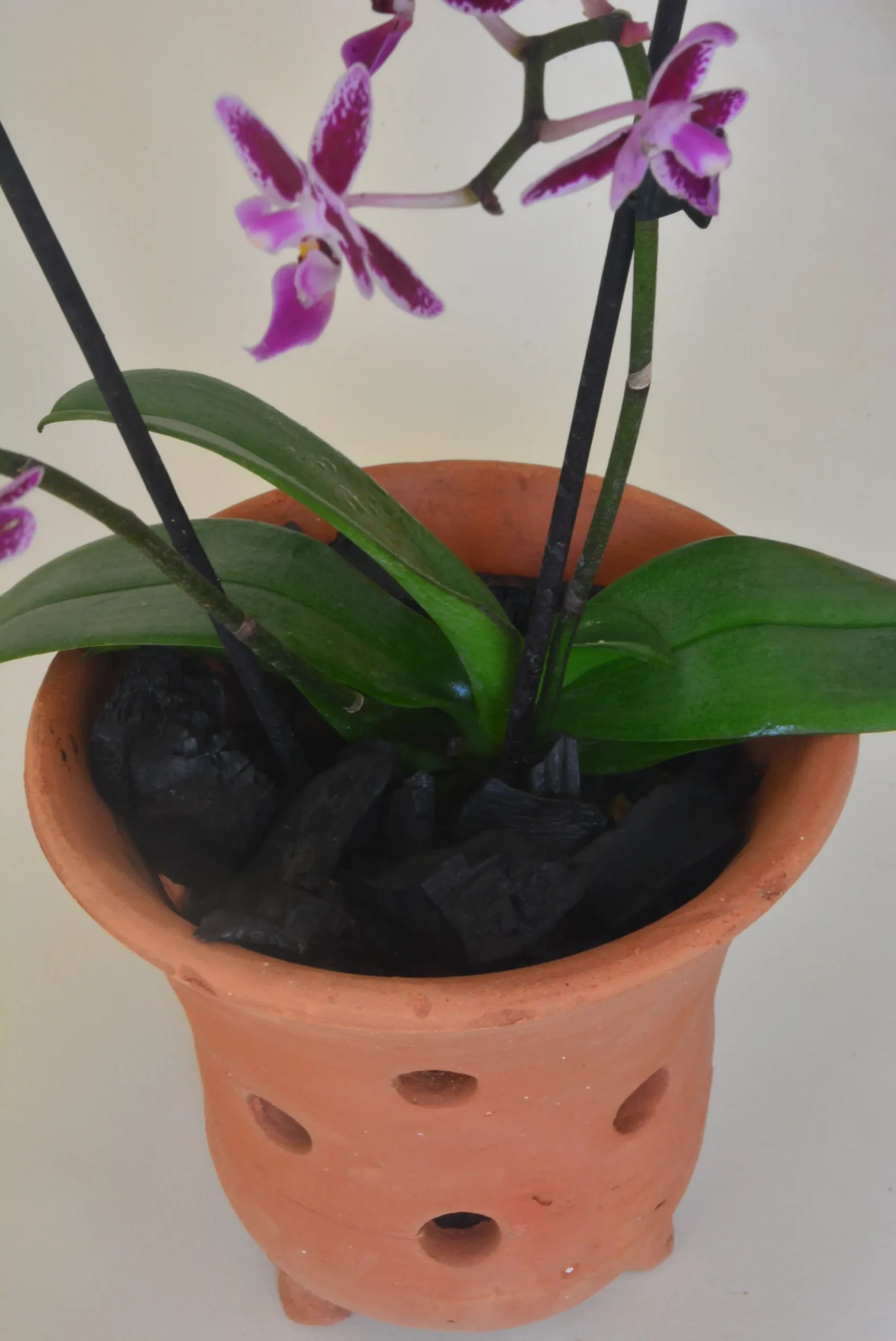
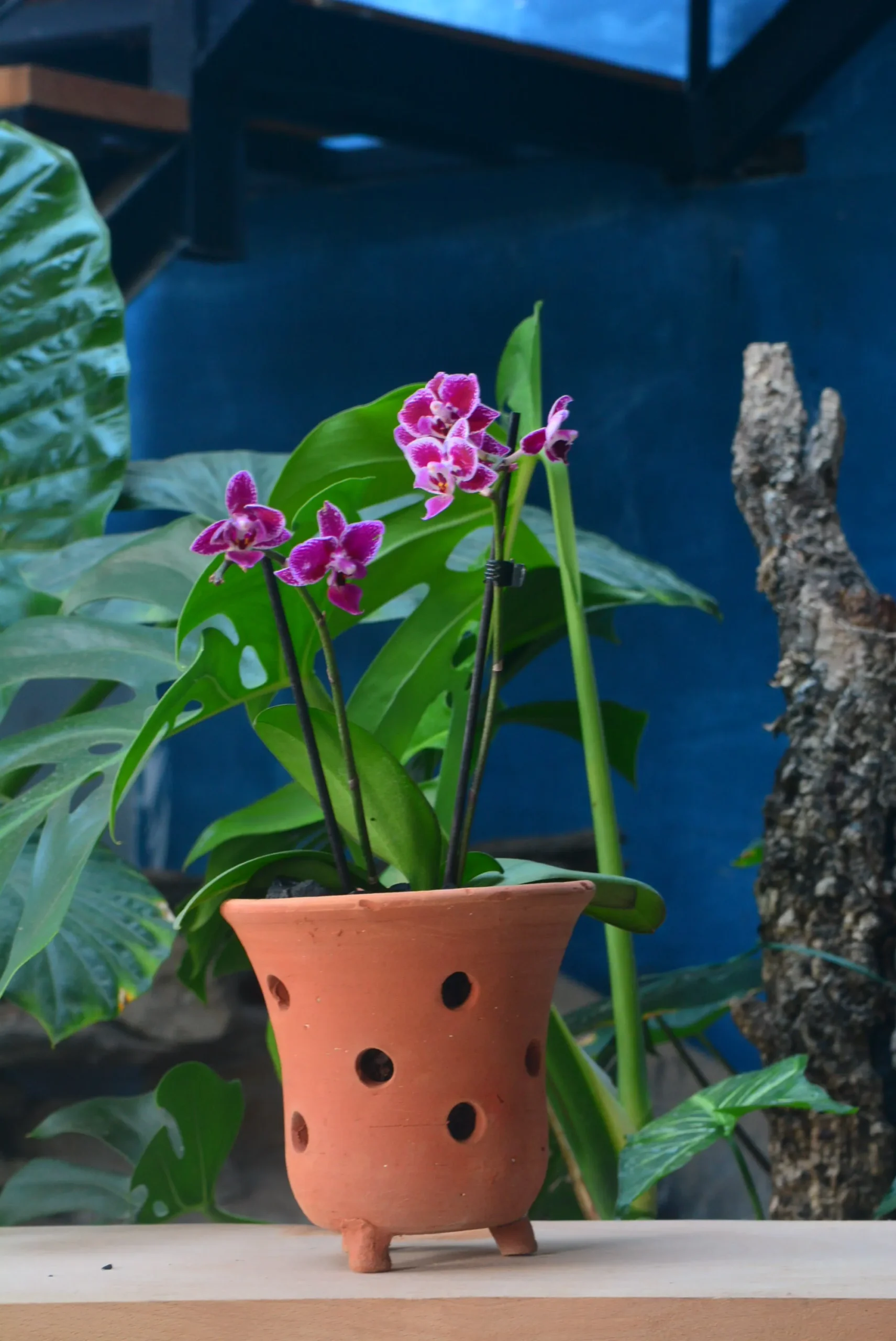
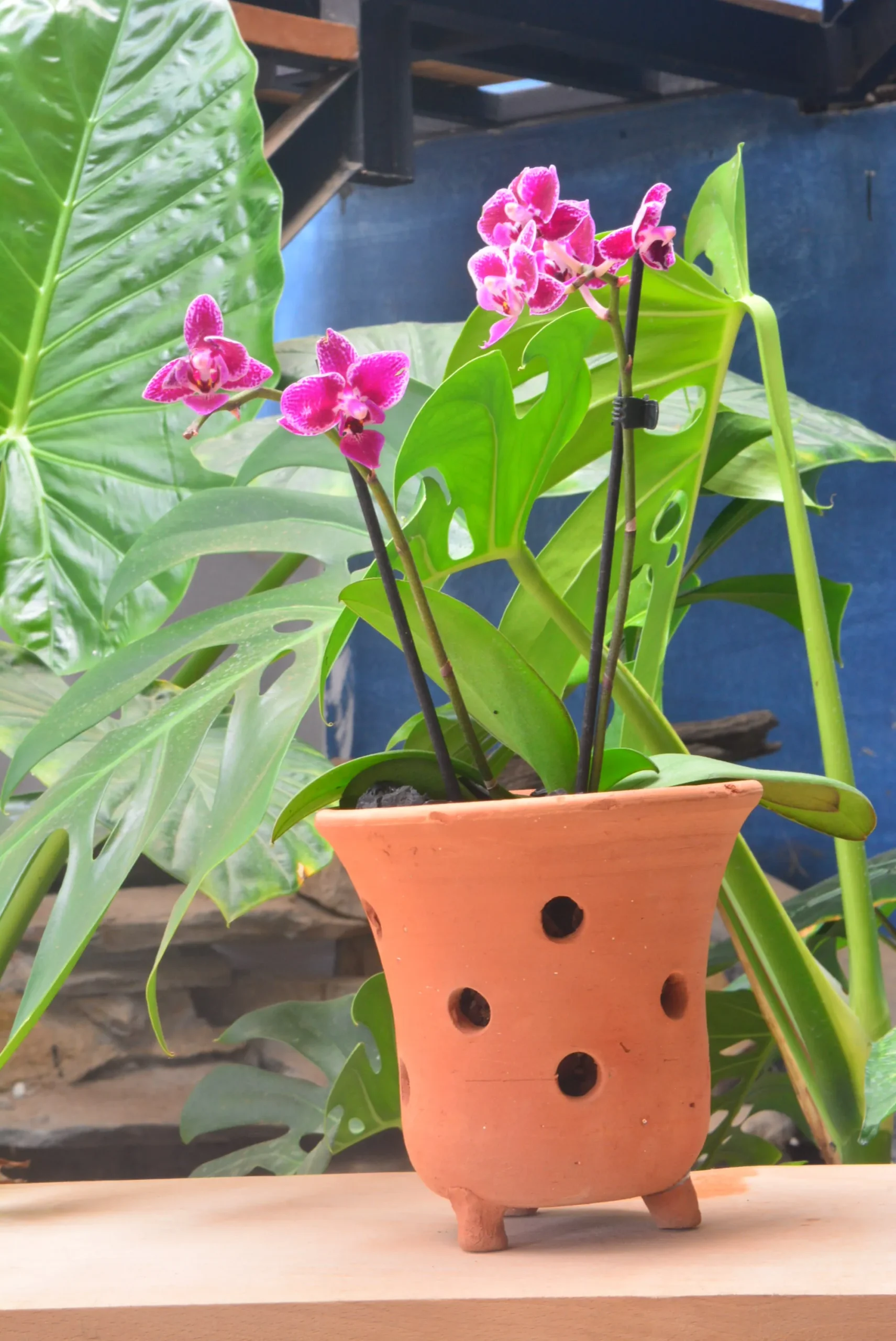
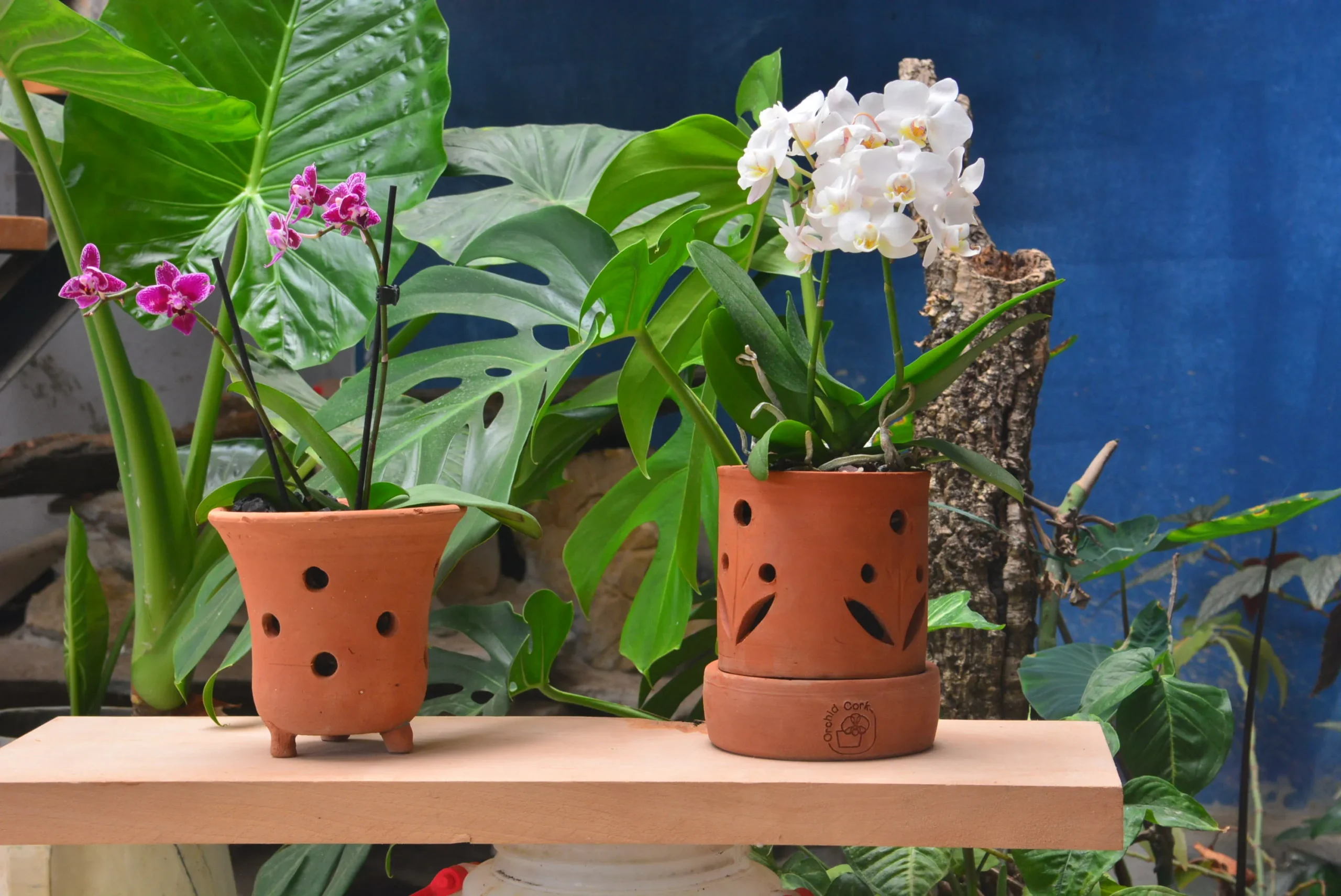
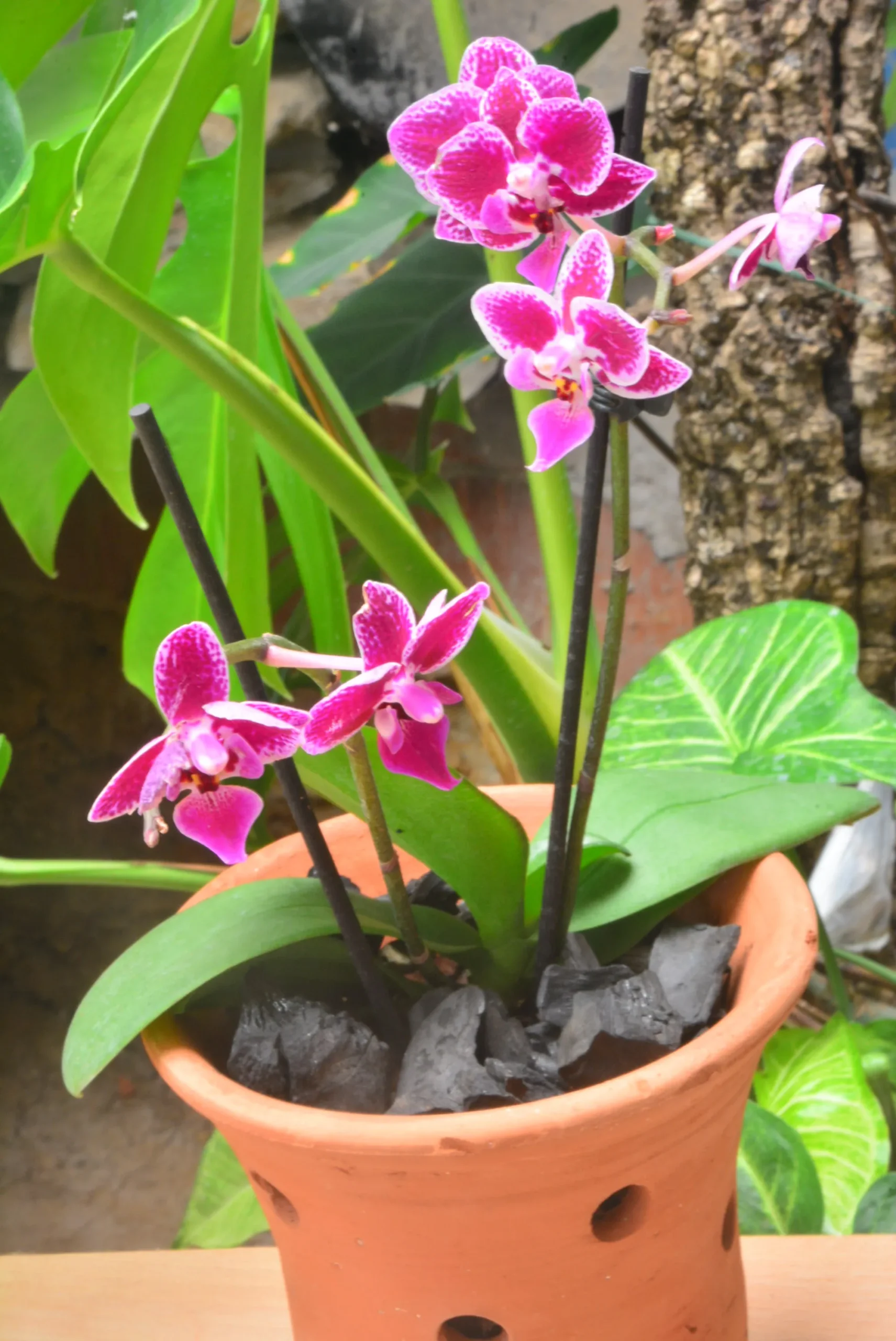
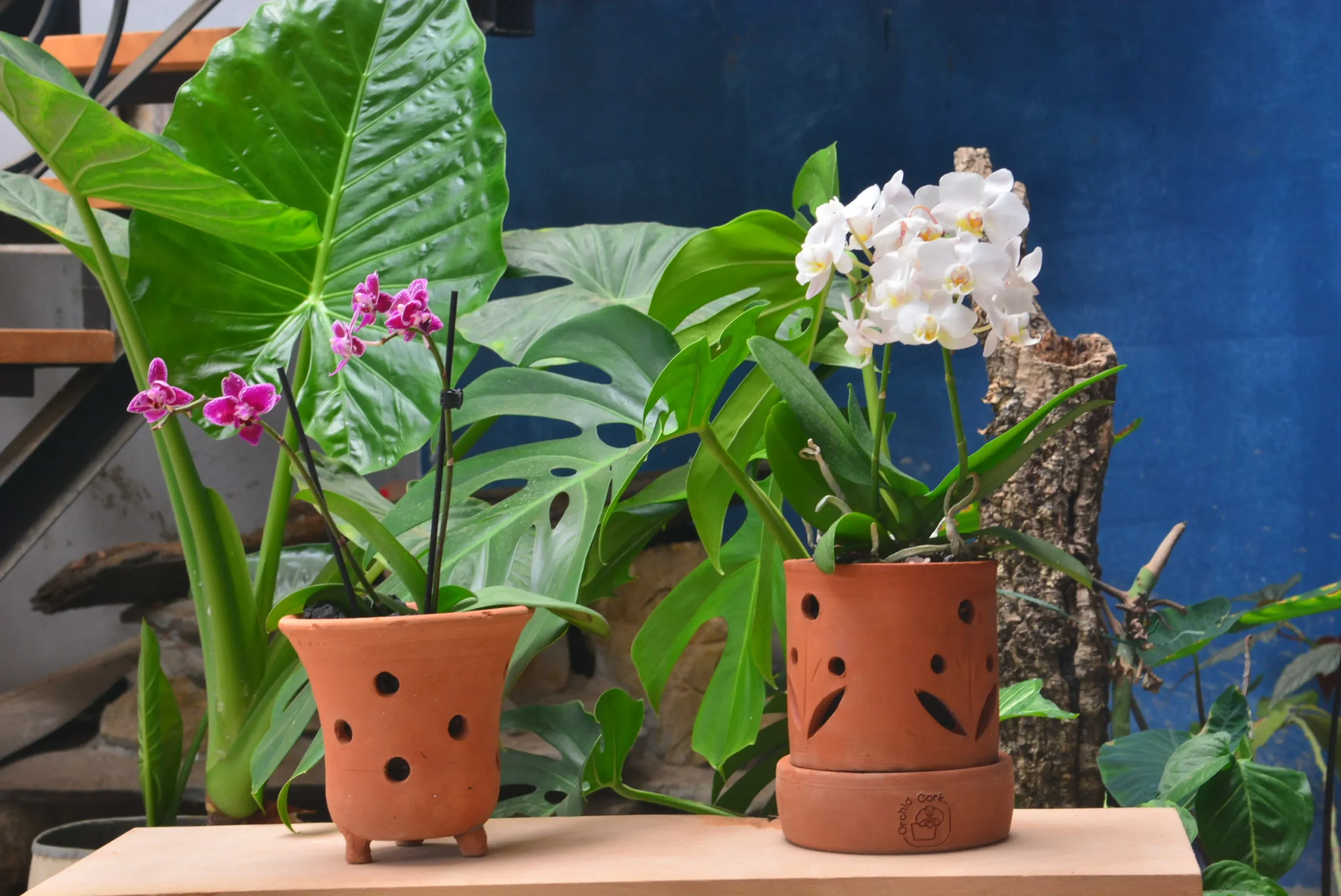
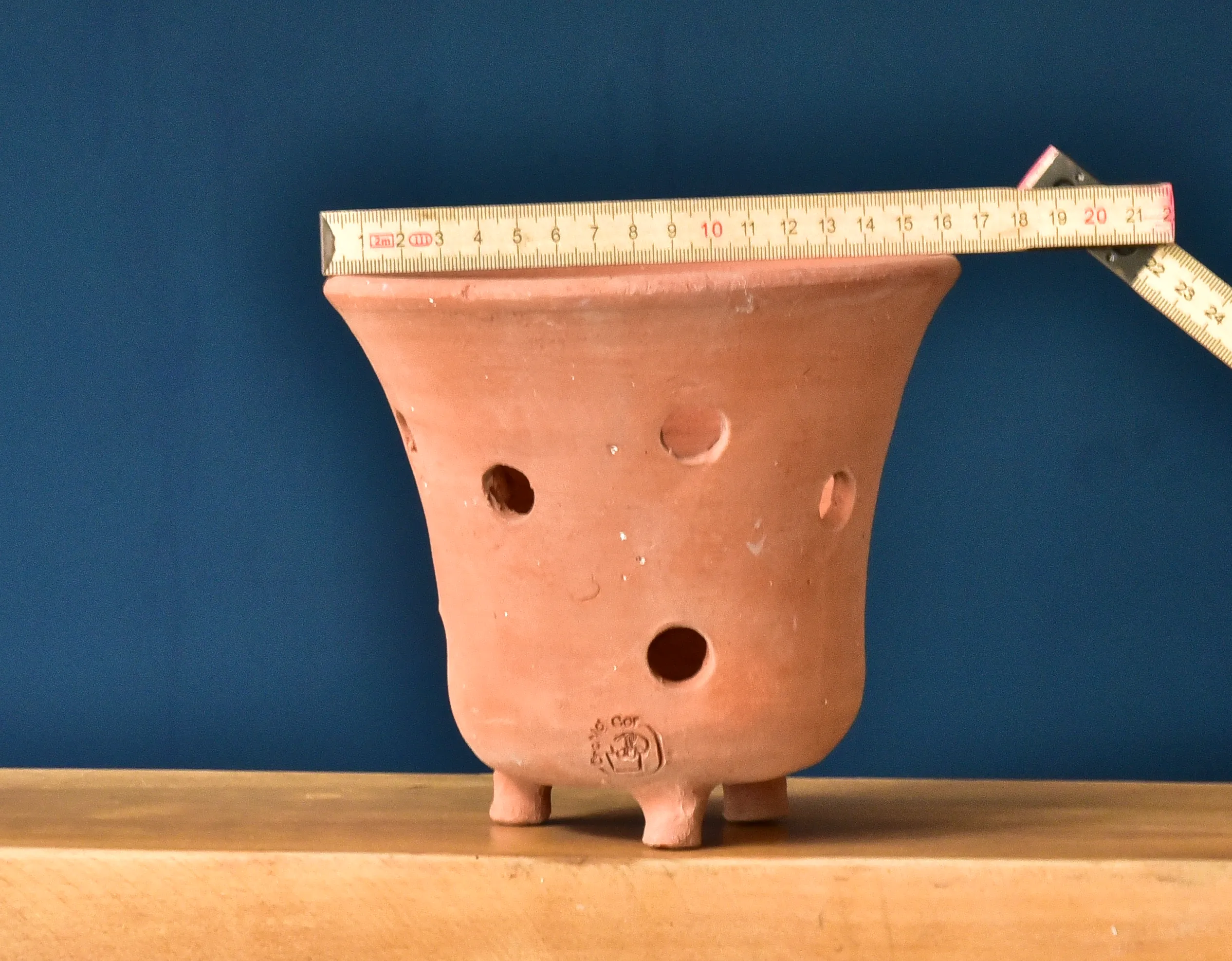
These handmade unglazed terracotta orchid pots combine three essential design elements that address the primary causes of root failure in orchid cultivation: inadequate drainage, insufficient airflow, and moisture retention around the root zone. Unlike conventional containers that prioritize aesthetic appeal, these breathable terracotta pots for orchids are engineered to replicate the natural conditions epiphytic orchids require for vigorous root development.
First: unglazed terracotta construction for natural breathability
The pots are crafted from low-fired terracotta, a material that preserves the natural porosity of clay. This porous structure allows constant gas exchange through the vessel walls, enabling oxygen to reach the root zone while excess moisture evaporates laterally. This breathability is critical for orchid root health because epiphytic orchid roots evolved to function in environments with constant air circulation, never in sealed or impermeable containers. When roots remain surrounded by stagnant air and trapped moisture, anaerobic conditions develop rapidly, creating ideal environments for fungal pathogens and bacterial rot. The unglazed surface of these natural clay orchid pots prevents that scenario by maintaining continuous airflow through the material itself, not merely through drainage holes.
Second: raised feet design for bottom airflow and improved drainage
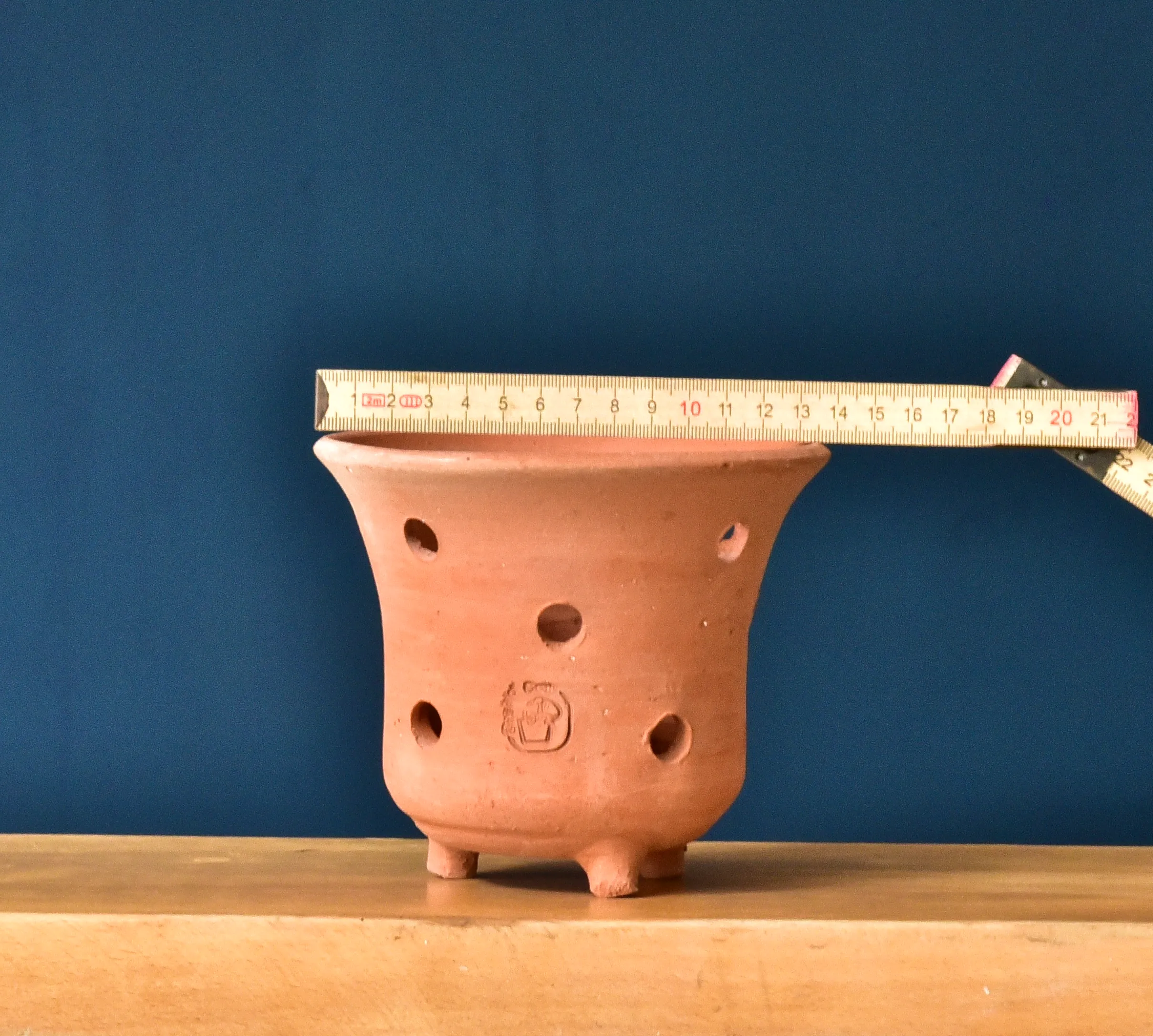
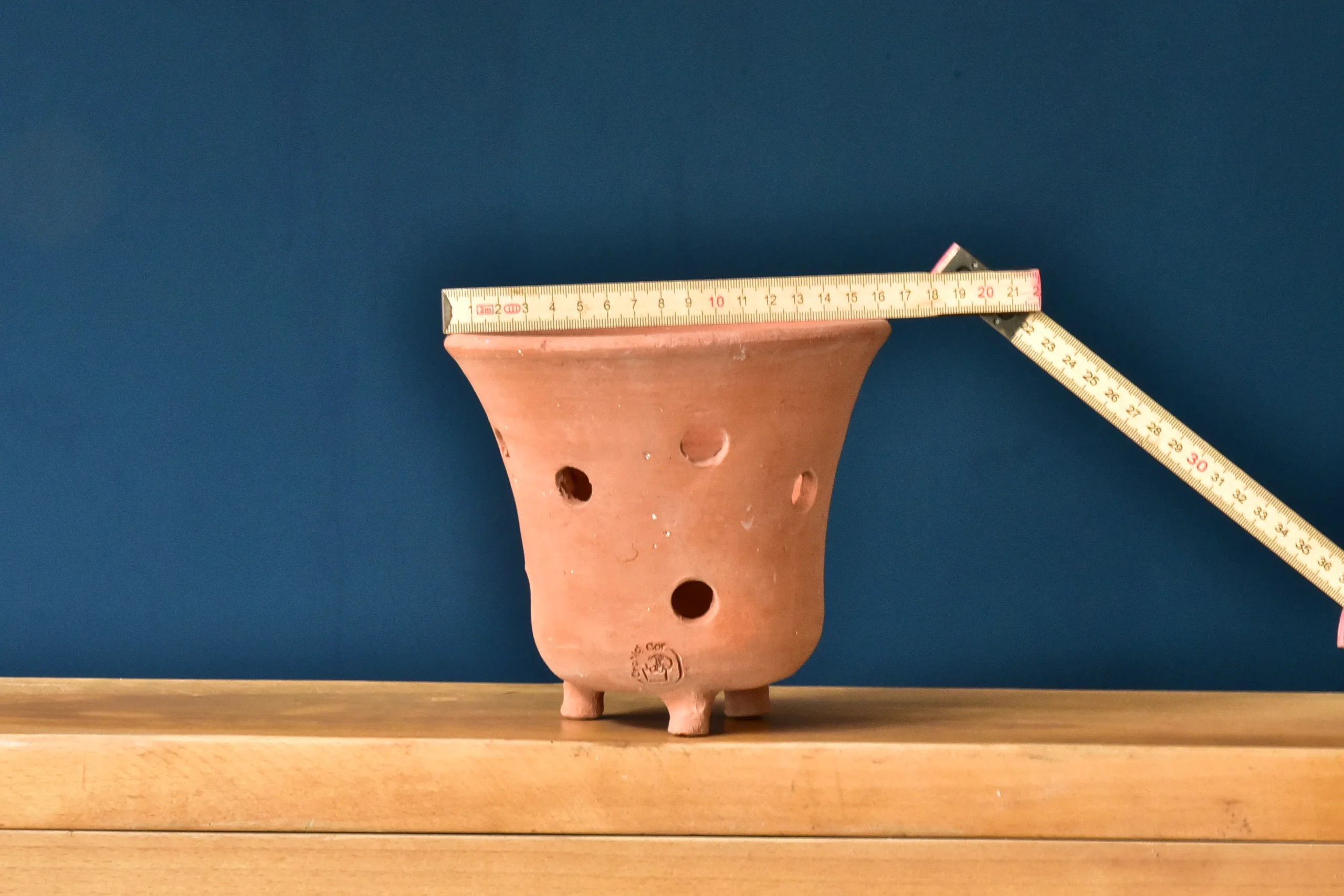
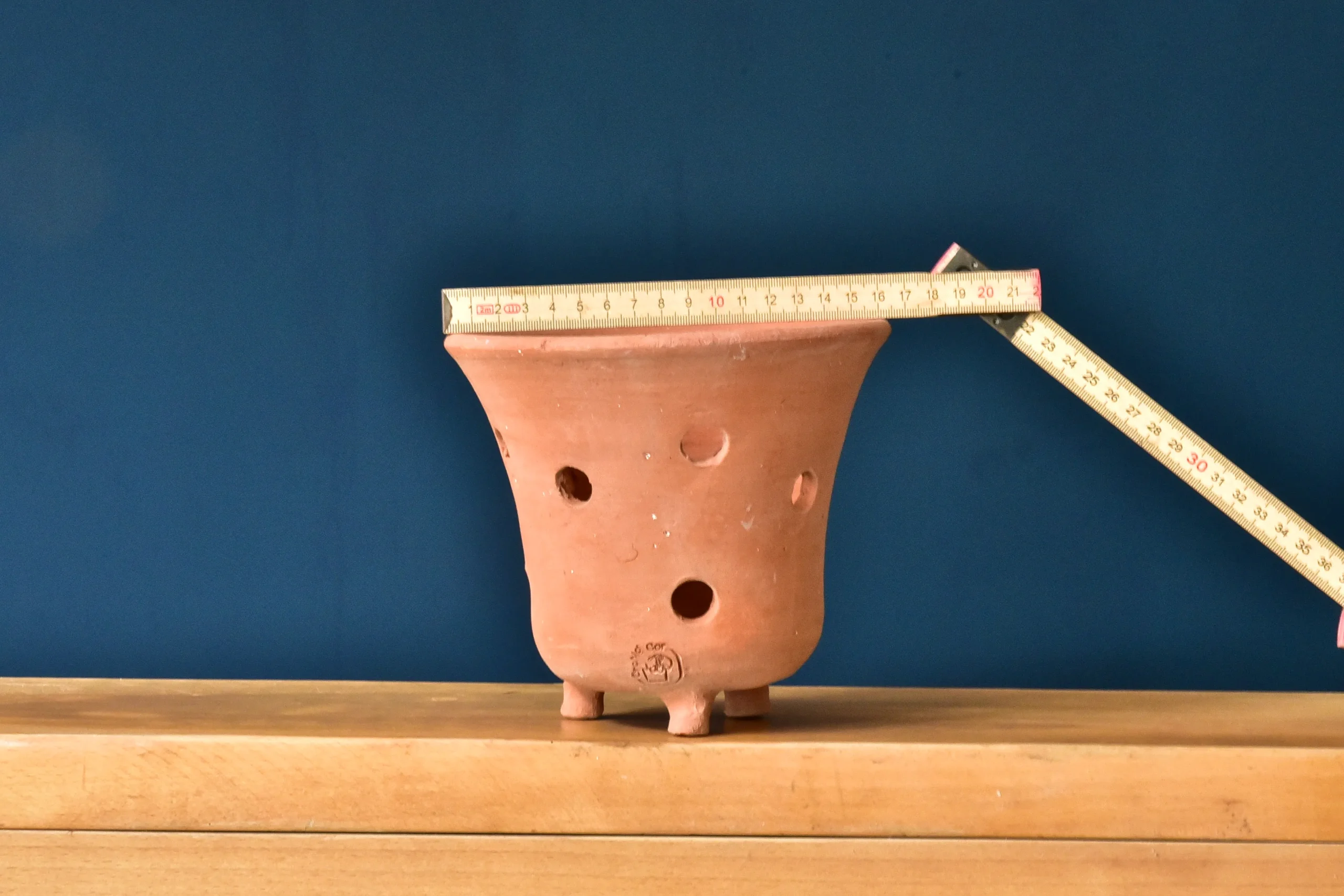
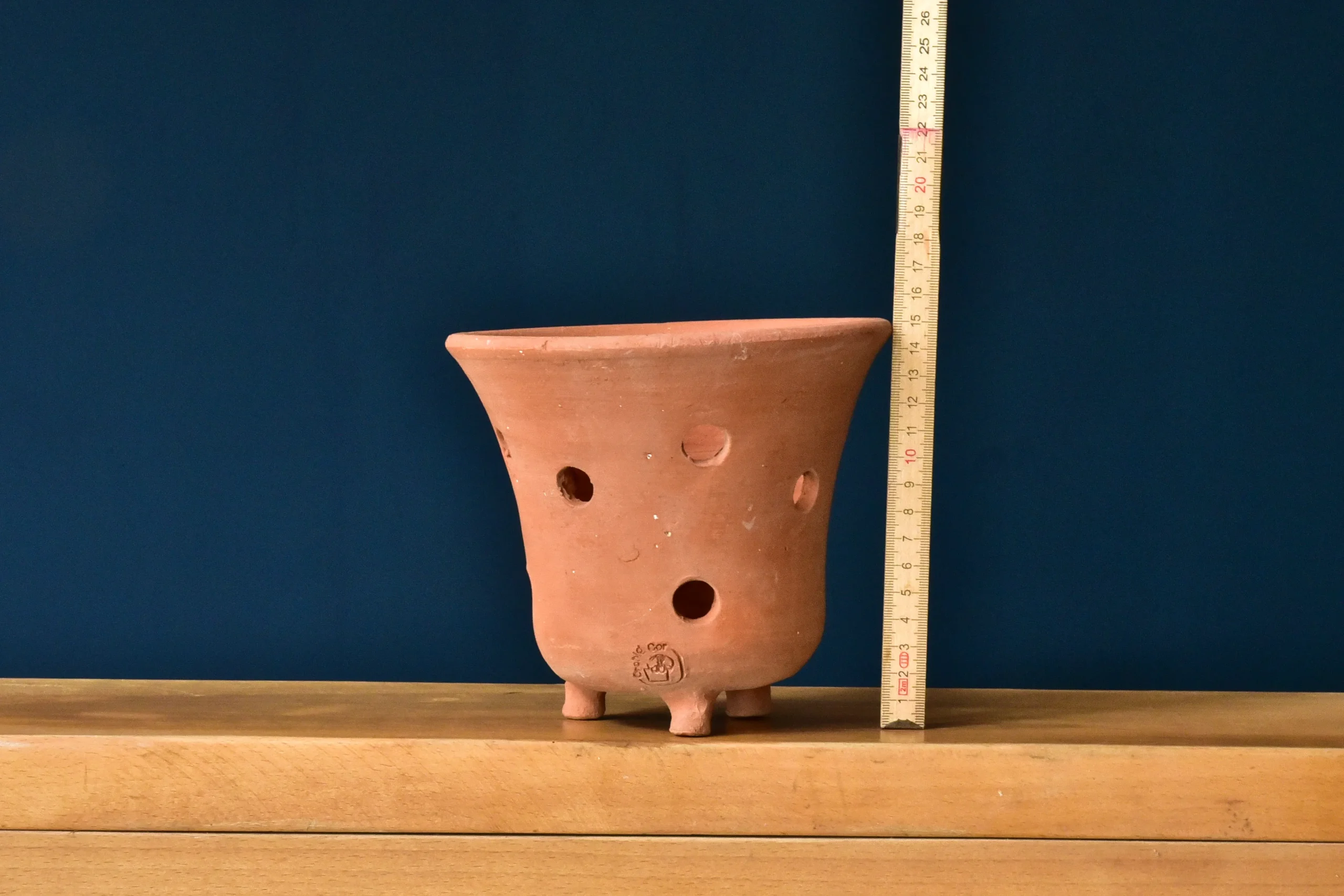
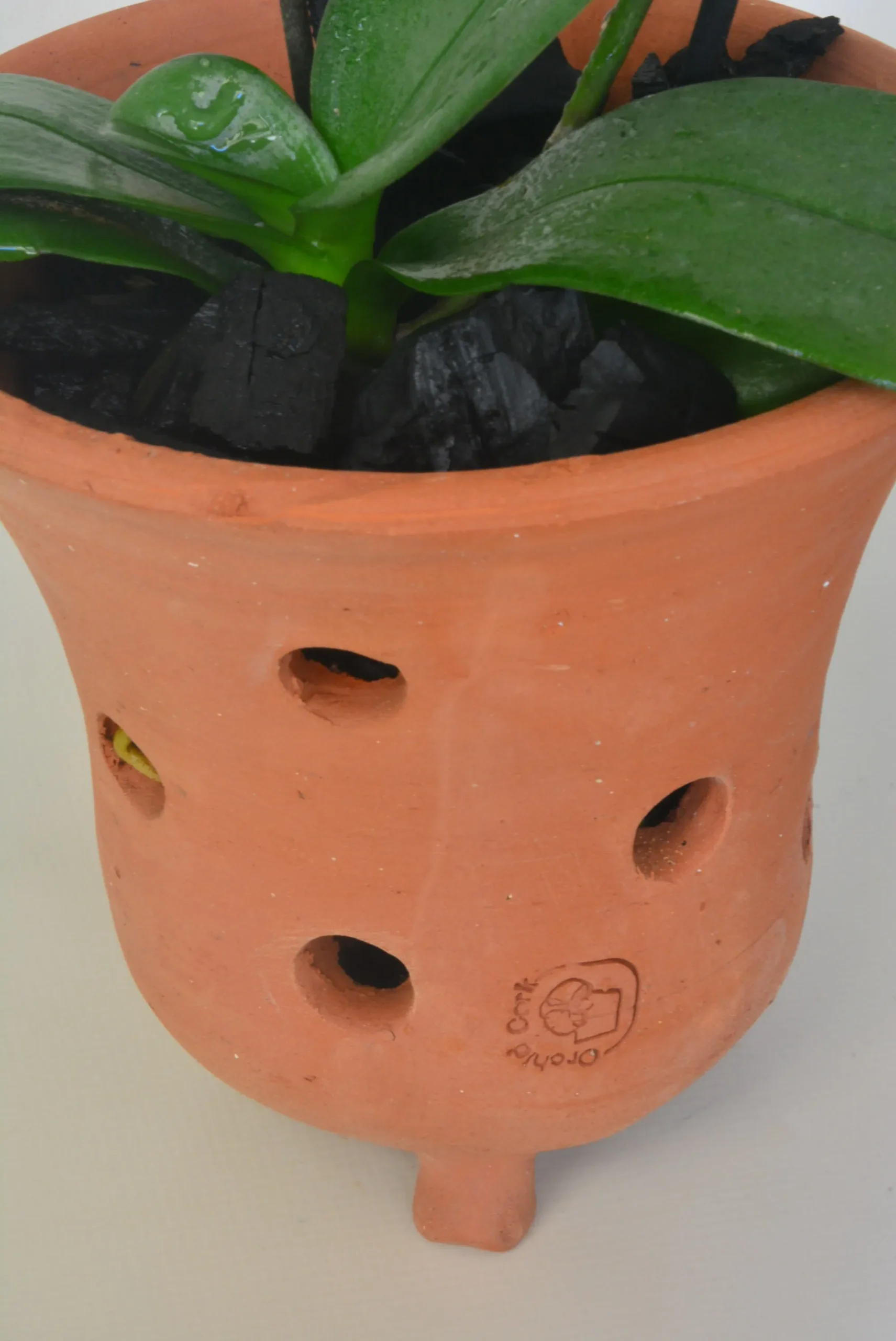
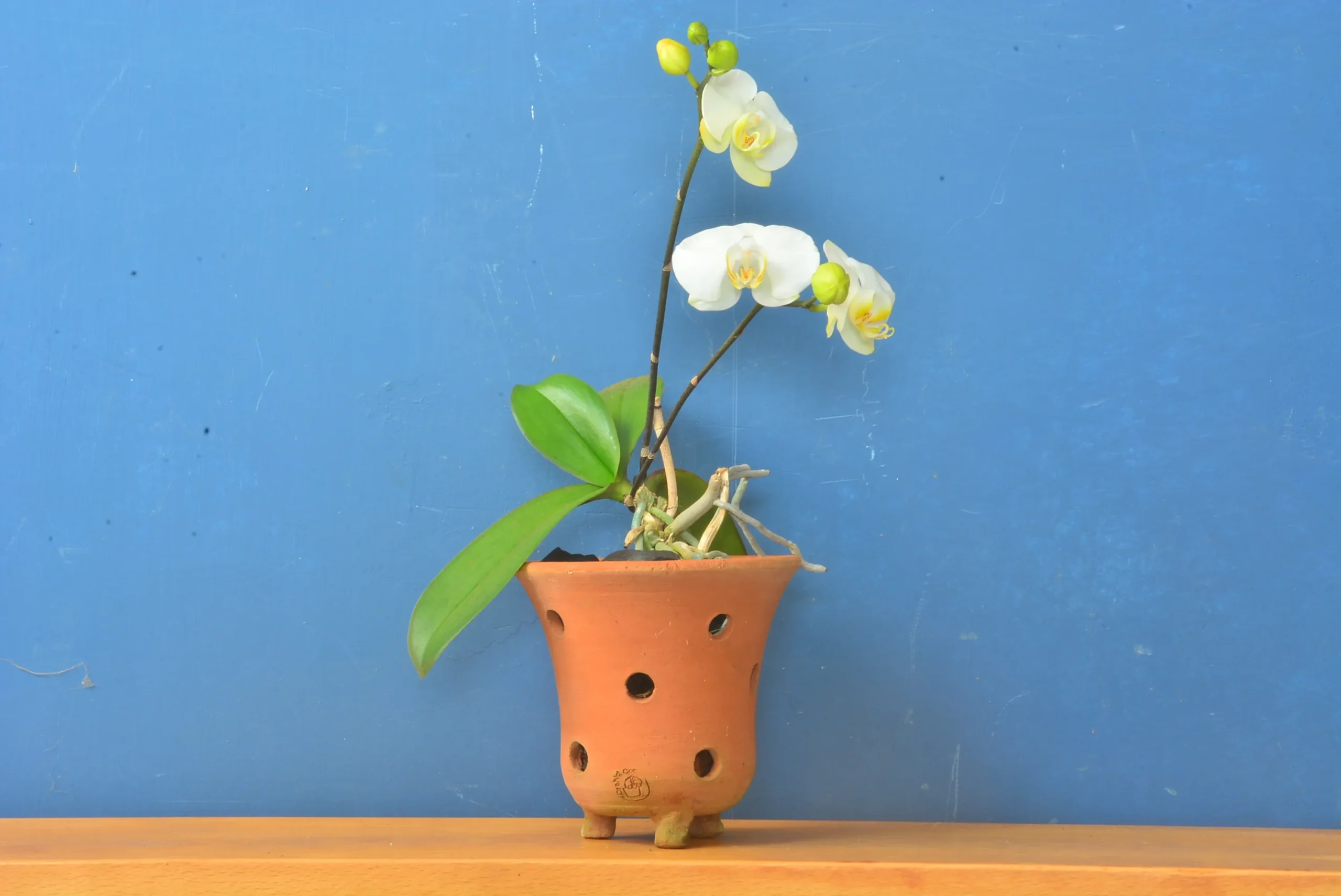
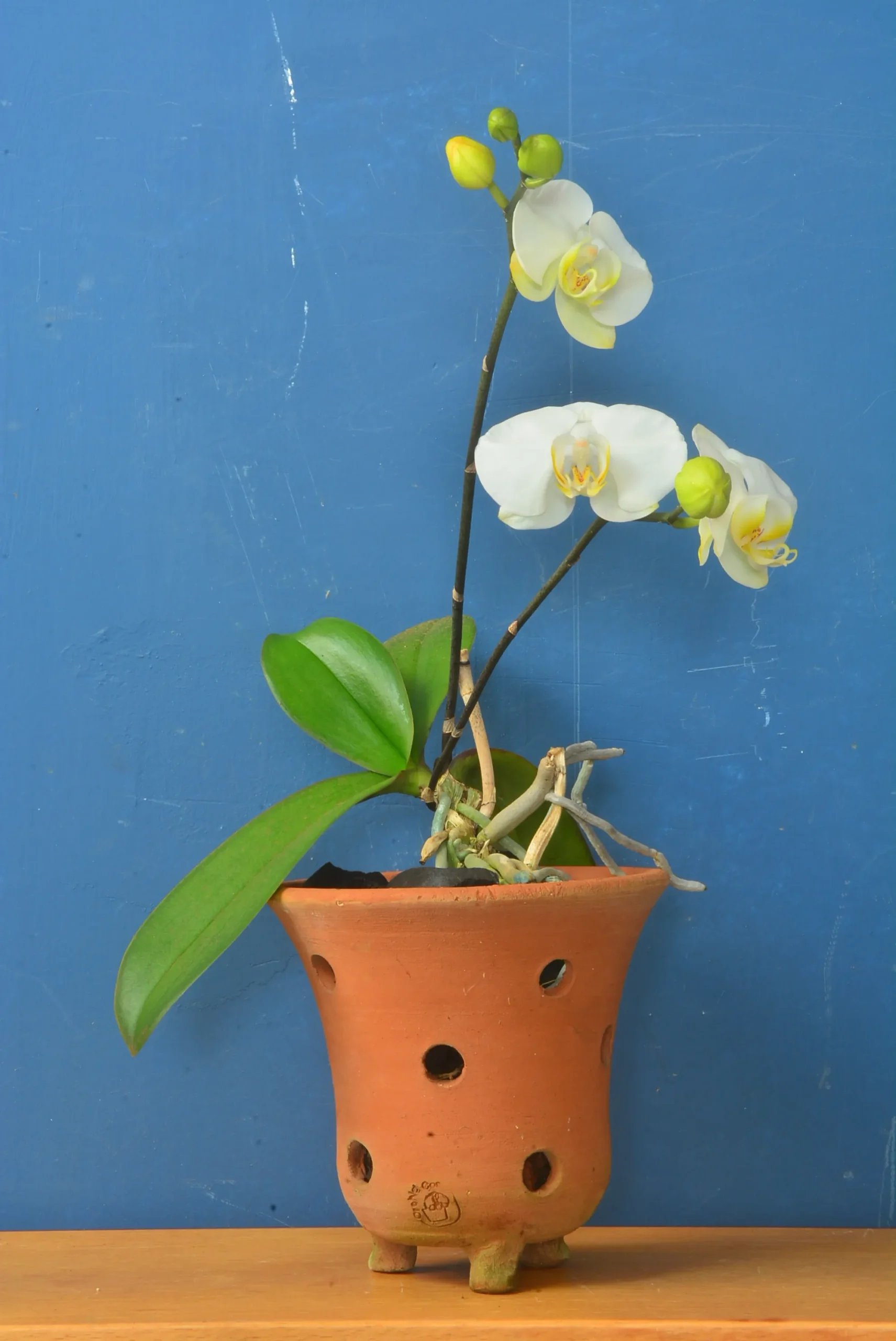
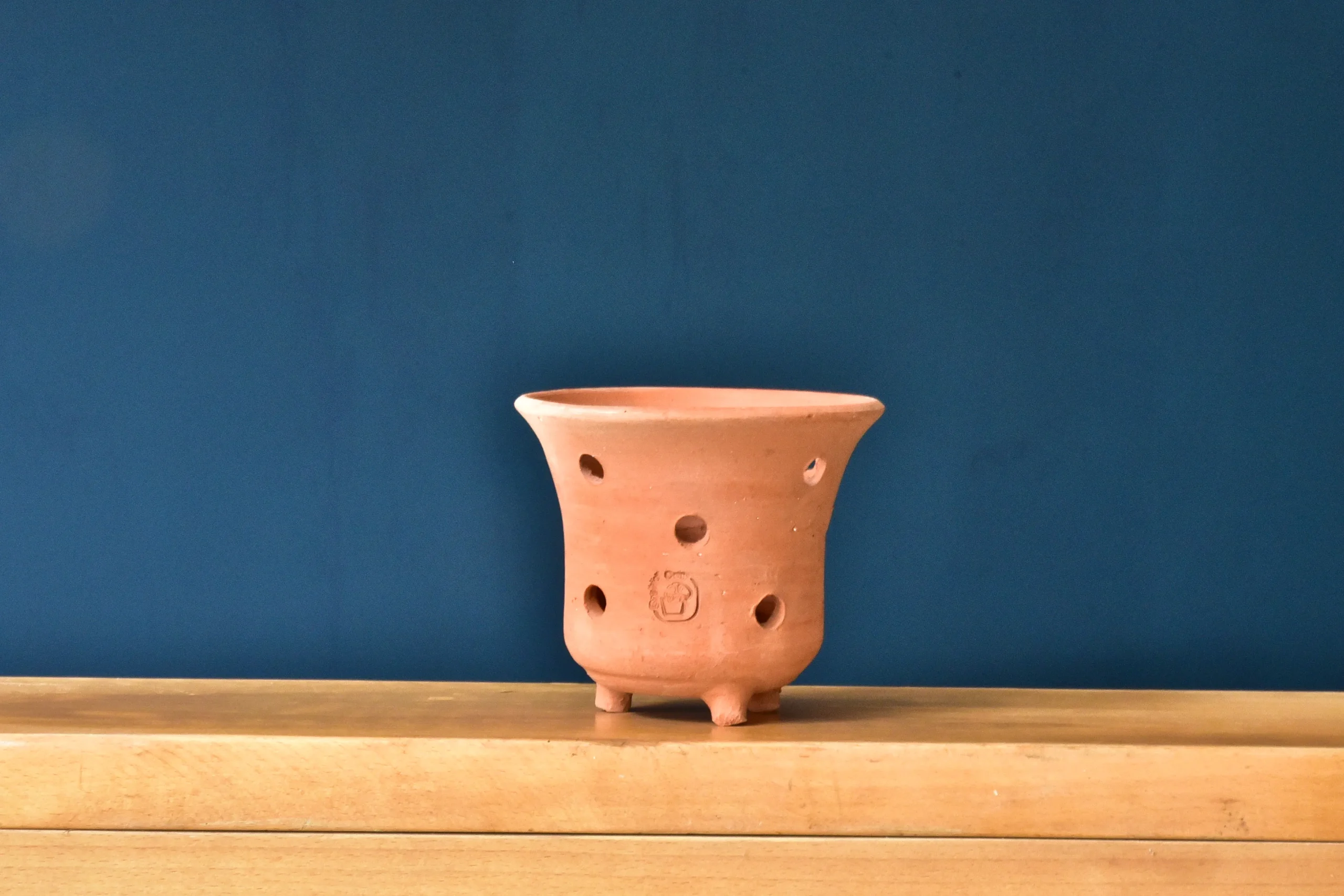
Each pot features small integrated feet that elevate the base approximately one to two centimeters above any surface. This raised design creates an air chamber underneath the container that serves multiple functions. First, it prevents standing water from accumulating beneath the pot, a common problem when containers sit directly on trays or saucers. Even minimal water contact with the bottom drainage hole can create capillary action that draws moisture back into the medium, negating the benefit of drainage entirely. The air gap created by the raised feet eliminates this issue completely. Second, the elevation allows airflow from below, creating a convection current that draws fresh air up through the drainage holes and substrate. This bottom airflow for orchid pots is particularly effective in enclosed growing spaces like windowsills or shelving units where lateral air movement may be limited. Third, the gap facilitates faster evaporation of residual moisture from the lower substrate layers, ensuring the medium dries evenly from bottom to top rather than remaining saturated at the base while the surface appears dry.
Third: side ventilation holes for accelerated drying and direct root aeration
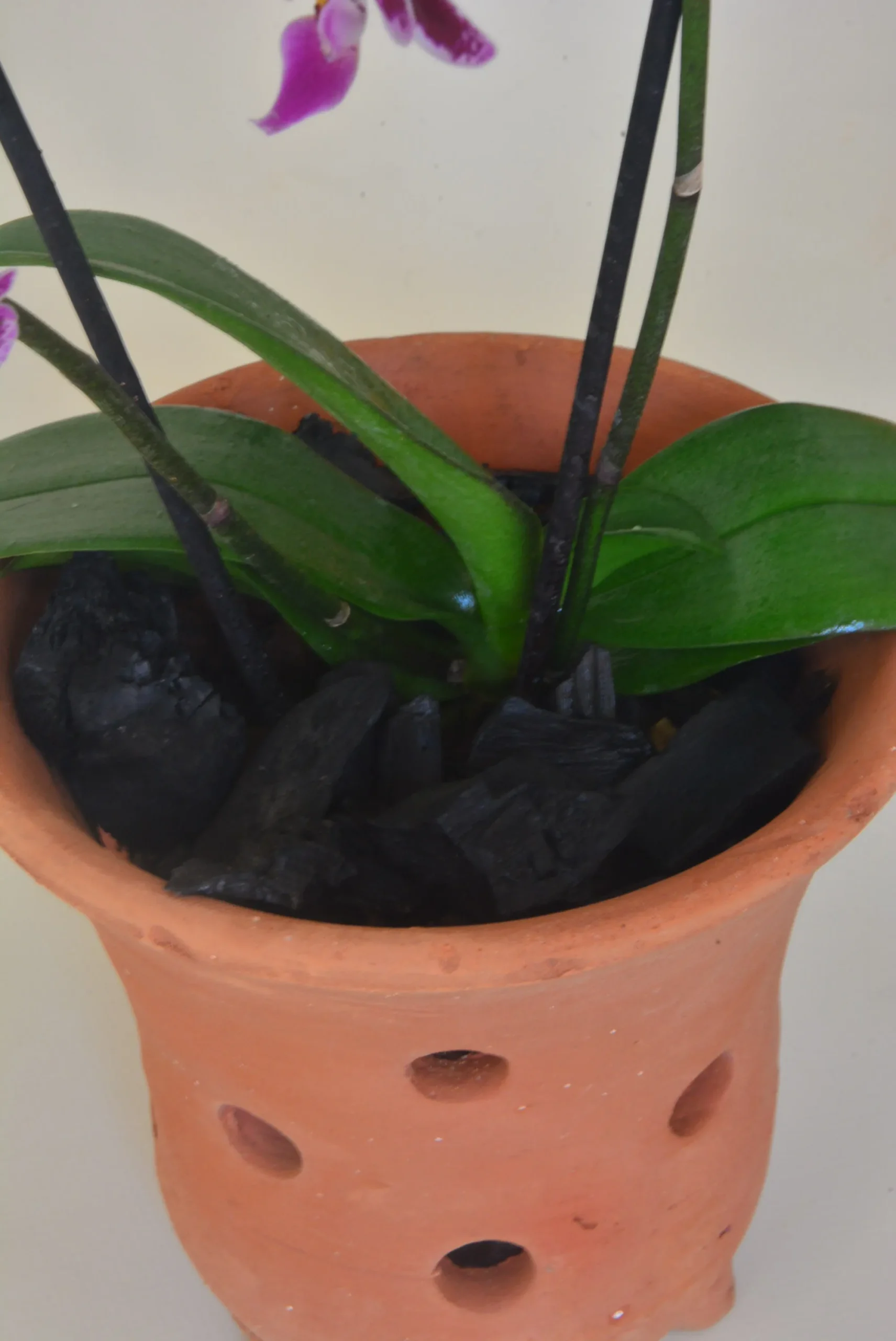
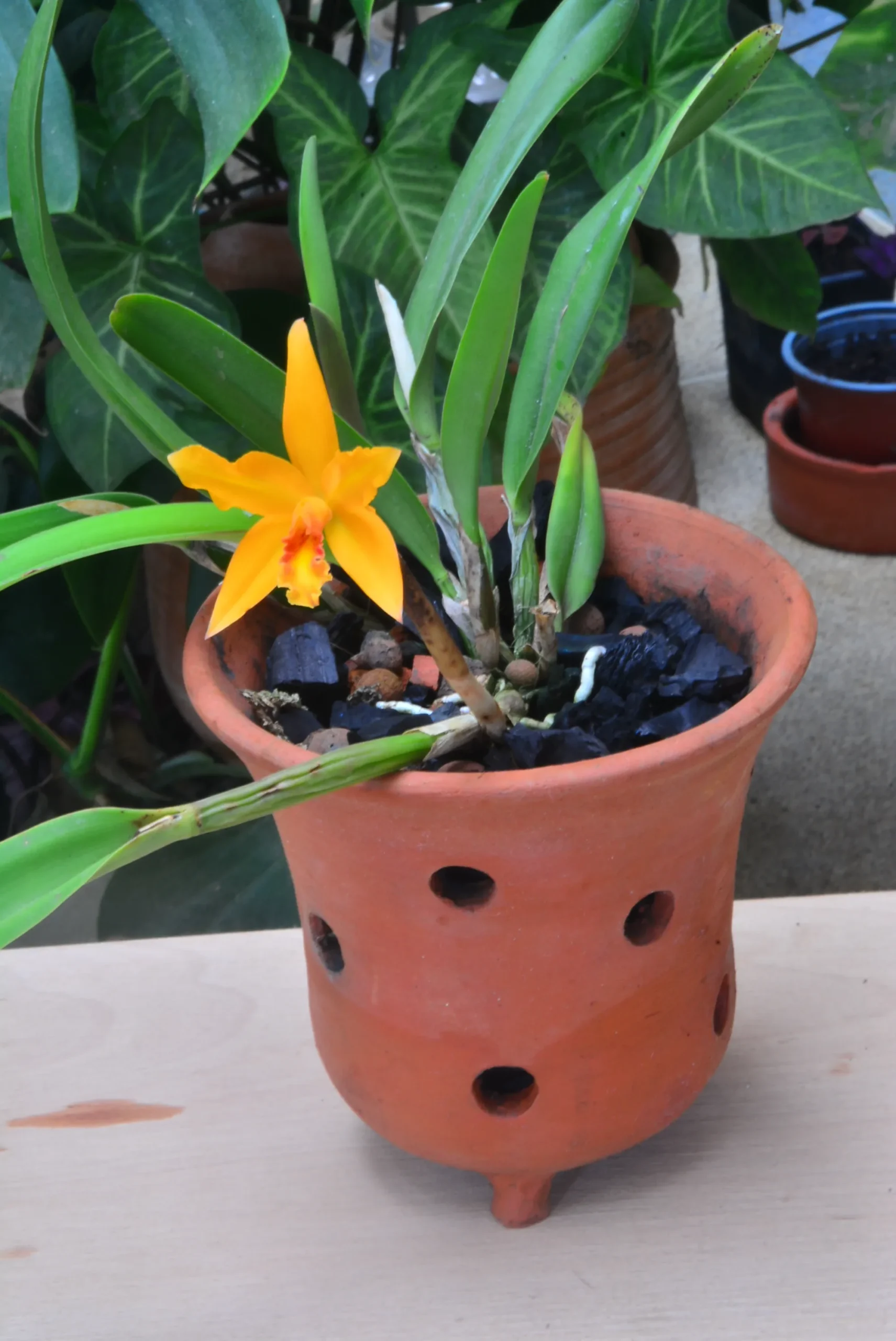
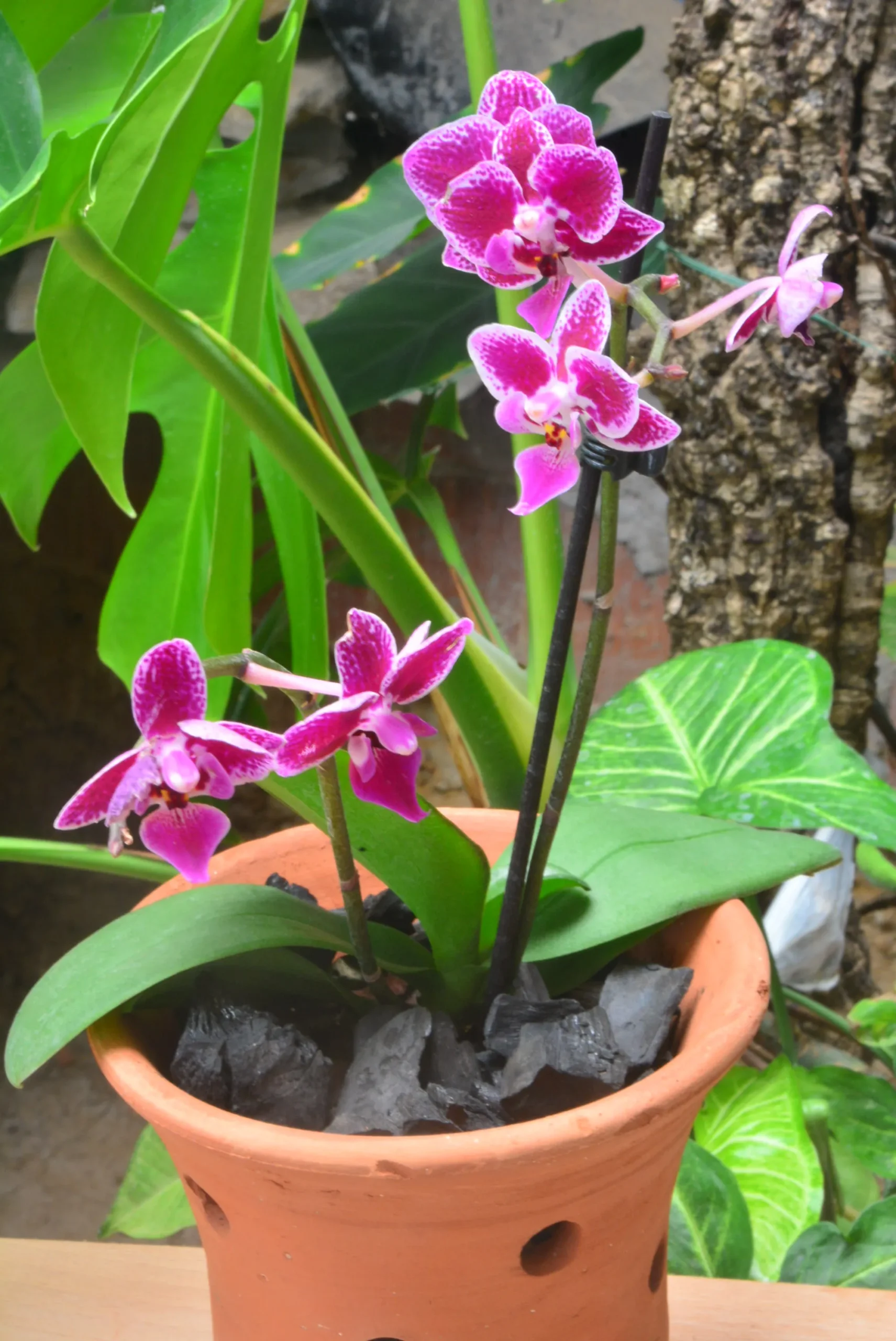
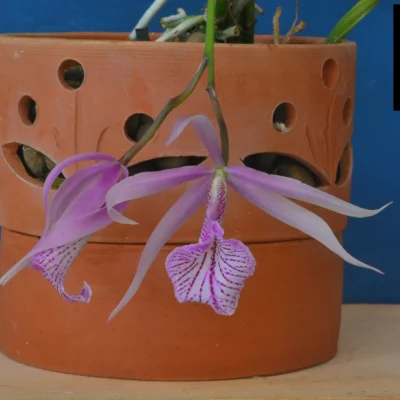
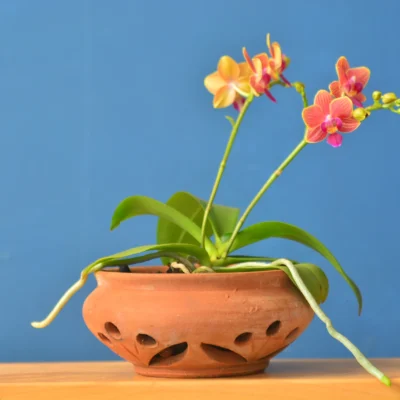
Multiple ventilation holes distributed around the pot walls provide direct airflow to roots growing in the outer substrate zones. These side holes serve a different function than bottom drainage: rather than allowing water to exit, they permit air to enter laterally, creating cross-ventilation throughout the root mass. This is especially important for orchids with vigorous root systems that colonize the entire substrate volume. In conventional pots without side ventilation, roots growing against the inner walls often remain in contact with persistently moist substrate, even when the center has dried adequately. The side ventilation orchid pots eliminate this moisture gradient by allowing those outer zones to dry at the same rate as interior substrate. This even drying pattern reduces the risk of localized fungal issues and prevents root suffocation in areas where oxygen exchange would otherwise be restricted.
Fourth: preventing root rot through comprehensive oxygenation
Root rot in orchids is rarely caused by a single factor; it results from the interaction of excessive moisture, inadequate oxygen, and opportunistic pathogens. These orchid pots address all three simultaneously. The unglazed terracotta provides passive moisture regulation through evaporative cooling and lateral vapor transmission. The raised feet ensure that drainage is complete and bottom substrate layers receive adequate air exchange. The side holes guarantee that even densely rooted outer zones maintain oxygen levels sufficient for aerobic root respiration. This comprehensive approach to oxygenation of orchid roots creates growing conditions where healthy roots outcompete pathogens naturally, without reliance on chemical interventions or precision watering schedules that most home growers find difficult to maintain.
Fifth: practical application across growing environments
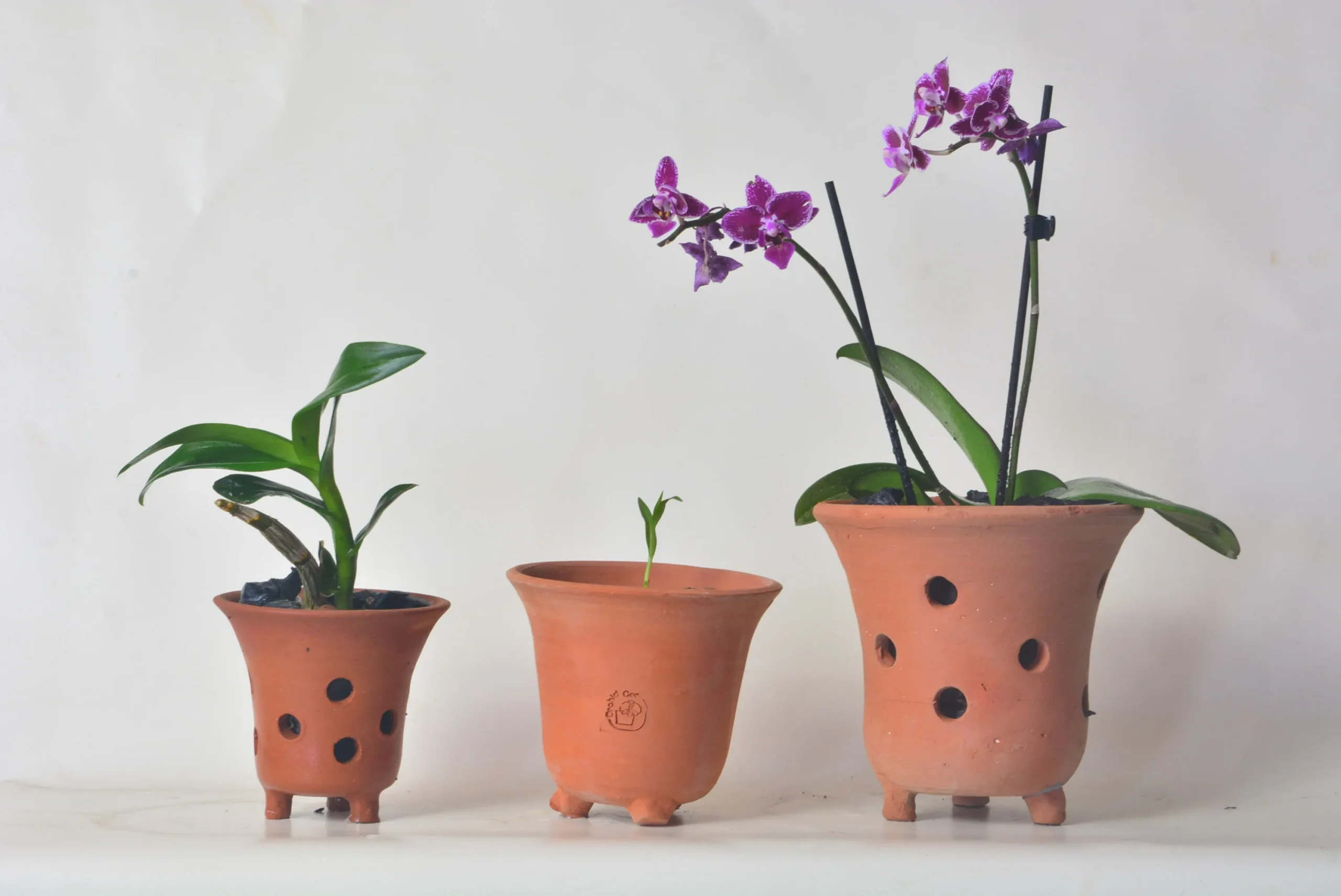
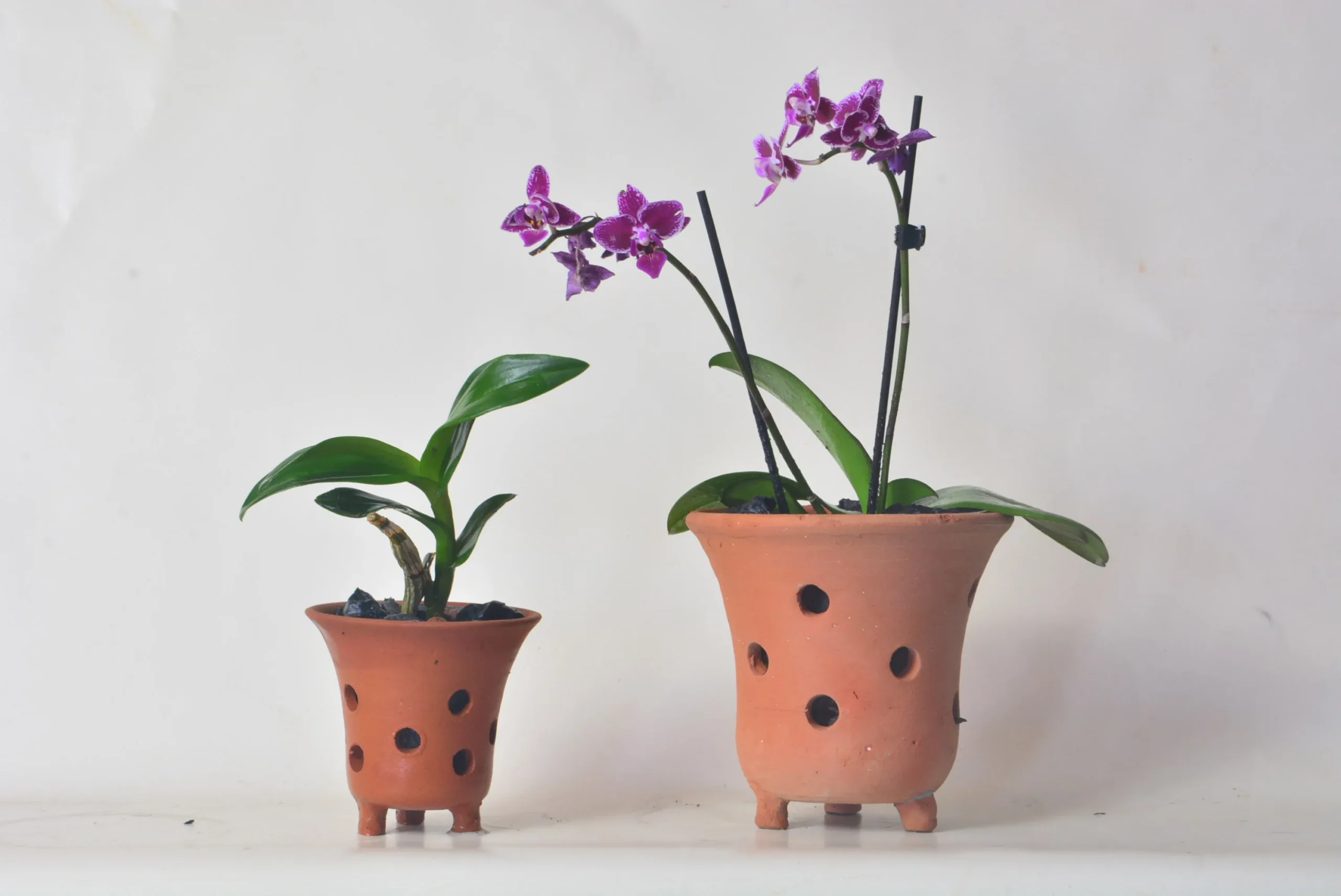
These ventilated orchid pots function effectively in both greenhouse environments and indoor growing spaces. In high-humidity greenhouses where moisture retention is rarely a concern, the enhanced airflow prevents fungal issues that commonly affect orchids in saturated air. In low-humidity indoor conditions where rapid drying can stress plants, the terracotta’s thermal mass and moisture-buffering capacity moderate evaporation rates while still ensuring roots never remain waterlogged. The pots are suitable for any epiphytic orchid species requiring excellent drainage and aeration, including Cattleya, Phalaenopsis, Dendrobium, Oncidium, and Vanda-type orchids.
Designed to improve drainage, airflow, and root oxygenation using unglazed terracotta and raised feet.
📦 Important shipping notice
Standard shipping delivered via relay pickup point for most affordable rates and flexible collection schedule.
Relay pickup points in Europe:
🇬🇧 Parcel shop / Pickup point
🇩🇪 Paketshop / Abholstation
🇫🇷 Point relais
🇮🇹 Punto di ritiro
🇳🇱 Afhaalpunt
Shipping information
Shipping costs are calculated automatically at checkout based on your country, shipping zone, and total order weight.
Depending on your location, delivery is provided via pickup point or home delivery. The available option and price are shown automatically during checkout.
Orders over 4 kg qualify for free shipping.
Apparel items are shipped separately and may follow different shipping conditions.

Reviews
There are no reviews yet.